Multi-PSP is the new normal in 2025.
Recent data from 2024–2025 shows that, while many e-commerce merchants still rely on manual processes to sync payment provider data with ERP systems, automation adoption is accelerating rapidly. The figures below show the impact.
120 hours/month — average time finance teams spend on manual reconciliation tasks (Osfin)
90% of CFOs report ongoing payment processing issues (Osfin)
Only 59% of companies close books within a week of the month-end (Osfin)
Automation can reduce reconciliation time by 70% (ResolvePay)
Automation cuts reconciliation errors by 50% and improves cash flow visibility for 49% of finance professionals (ResolvePay)
Real-world case: 50% faster month-end close and 99.8% accuracy in matching transactions after implementing automated reconciliation (Ecommerce Germany News)
Four Main Connection Methods in 2025
In 2025, nearly half of merchants manually import PSP payouts into their ERP, even though it is slow, costly, and error-prone. iPaaS solutions are closing the gap quickly, particularly among multi-PSP merchants. Native direct integrations remain rare, limited to a handful of PSP–ERP pairs.
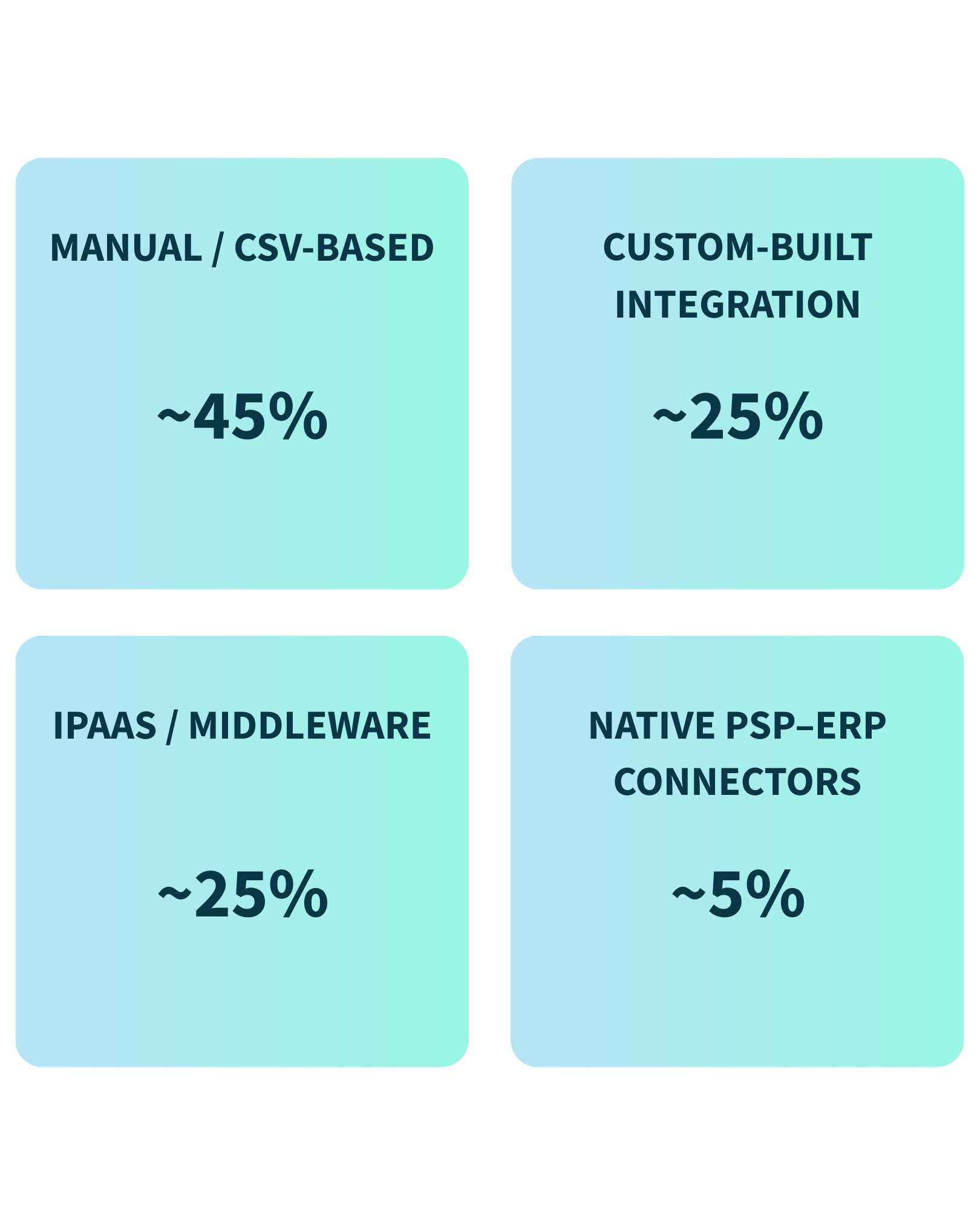 Manual — Downloading PSP payout reports (CSV/PDF) and updating ERP records by hand.
Custom-built — One-off API integrations coded by internal teams or agencies.
iPaaS — Cloud platforms like Junipeer with prebuilt connectors and mapping tools.
Native — Official PSP–ERP integration maintained by one of the vendors.
What Automation Delivers for Merchants
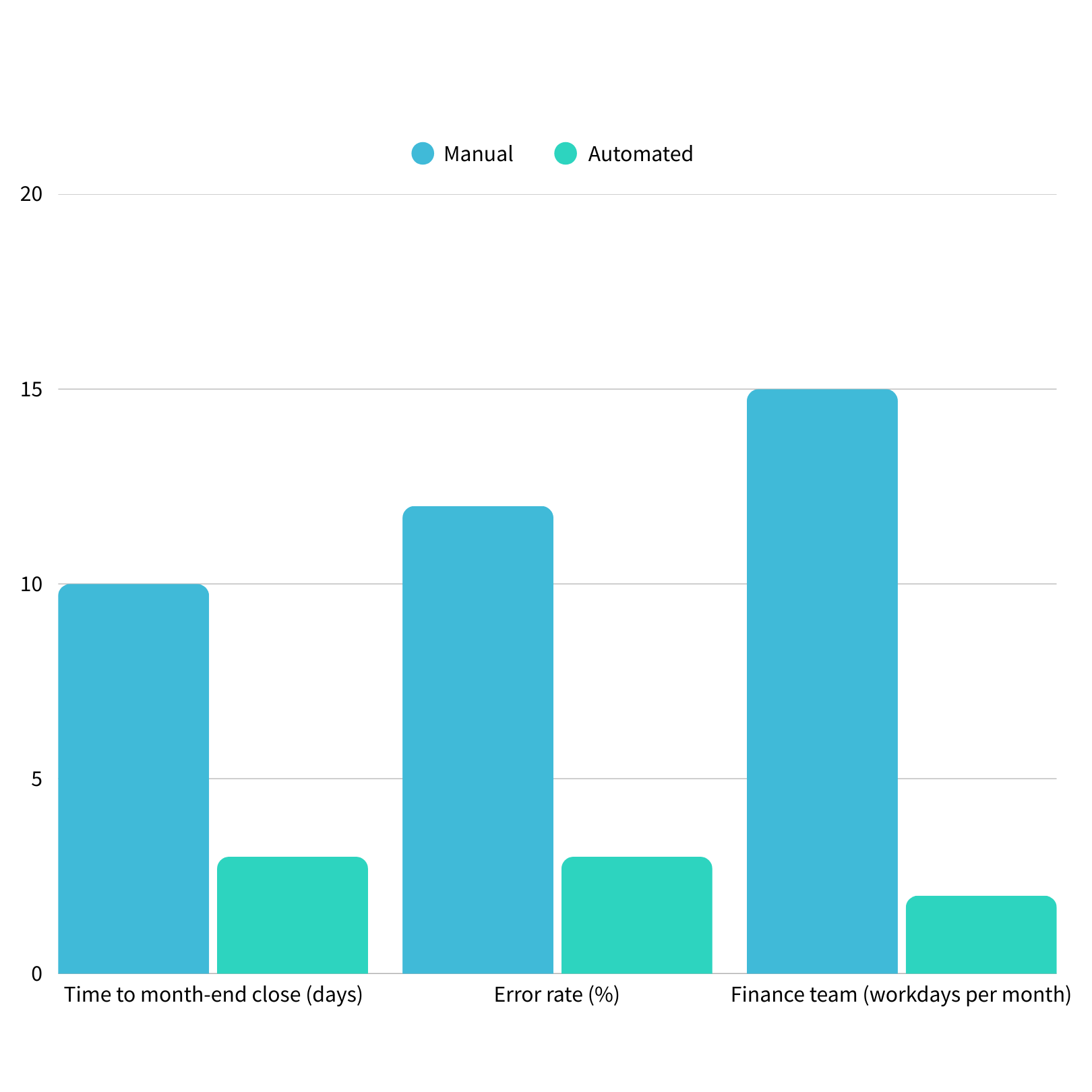
By integrating PSP data directly into their ERP, merchants drastically reduce reconciliation time, free up finance resources, and improve accuracy. Automation turns a multi-day month-end close into just a few days, cuts human error to a fraction, and eliminates repetitive data entry.
iPaaS Market Growth Signals Permanent Shift
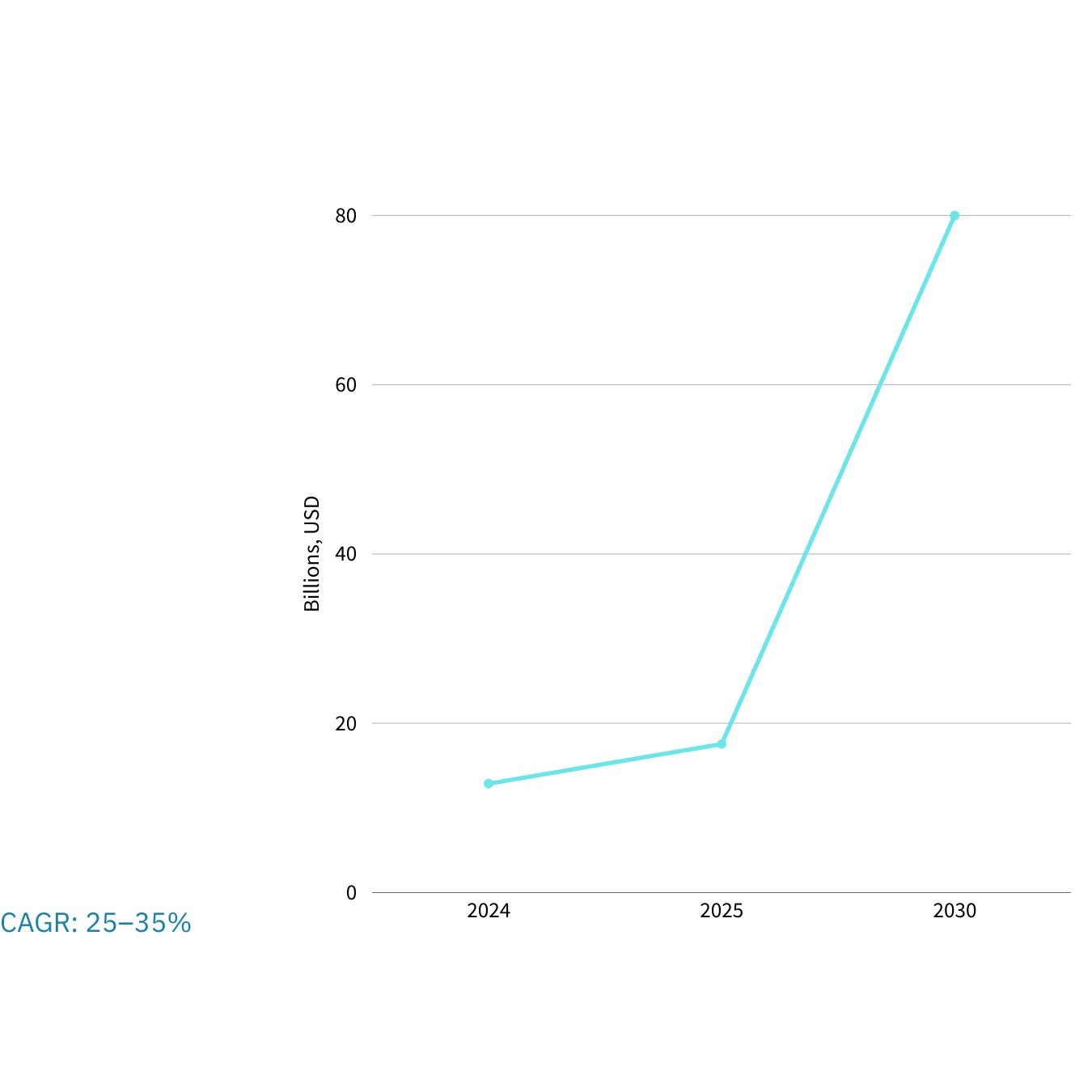
The integration-platform-as-a-service market is expanding rapidly as leading merchants seek flexible, API-driven connections between payment providers, e-commerce platforms, and ERPs. The majority of PSP–ERP integrations are expected to be handled via iPaaS by the end of the decade.
Multi-PSP is the new normal
Across e-commerce, merchants don’t rely on a single payment provider anymore. Adding wallets, BNPL, and local methods lifts conversion and resilience, but it also multiplies payout files, fee structures, disputes, currencies, and timing differences. The front-end gets better; the back-office gets busier.
At Junipeer, we look at this as a data logistics problem: many providers, many formats, one source of truth (your ERP). The scalable way to handle that is to run PSP-ERP on an integration platform-as-a-service (iPaaS).
Why iPaaS makes sense for PSP-ERP
Prebuilt connectors. You shouldn’t have to build a new integration every time you add a provider or market. iPaaS gives you maintained connectors and mappings so you configure, not code.
Understands settlement data. PSP artifacts (payouts, fees, refunds, chargebacks) are ingested and transformed into ERP-ready deposits and journal lines.
Right-time and real-time. Event webhooks update orders and captures quickly; scheduled jobs fetch settlements on a cadence.
Reliability by design. Retries, idempotency, and back-pressure handling keep flows stable when APIs or networks hiccup.
Operational visibility. Centralized run logs and exception views show what didn’t match and why.
Low-code changes. Teams adapt mappings and rules without starting a new IT project each time a provider changes a field or a new fee appears.
What this means in practice
Faster close: settlements, fees, and refunds land automatically in the ERP.
Fewer errors: the platform does the matching; you review exceptions.
Flexibility: add or swap PSPs without re-platforming your back office.
Audit-ready: clear trails from payout to posting.
Multi-PSP isn’t going away. Treating PSP-ERP as a managed integration layer lets merchants keep expanding payment choice at checkout while keeping the books clean, timely, and trustworthy. That’s the standard we design for.
)
'/%3e%3ccircle%20cx='190'%20cy='10'%20r='10'%20fill='%234CBCE6'/%3e%3cdefs%3e%3clinearGradient%20id='paint0_linear_2853_42628'%20x1='0'%20y1='9.99994'%20x2='190'%20y2='9.99987'%20gradientUnits='userSpaceOnUse'%3e%3cstop%20stop-color='%2314B8A6'/%3e%3cstop%20offset='1'%20stop-color='%234CBCE6'/%3e%3c/linearGradient%3e%3c/defs%3e%3c/svg%3e)